




.jpg)


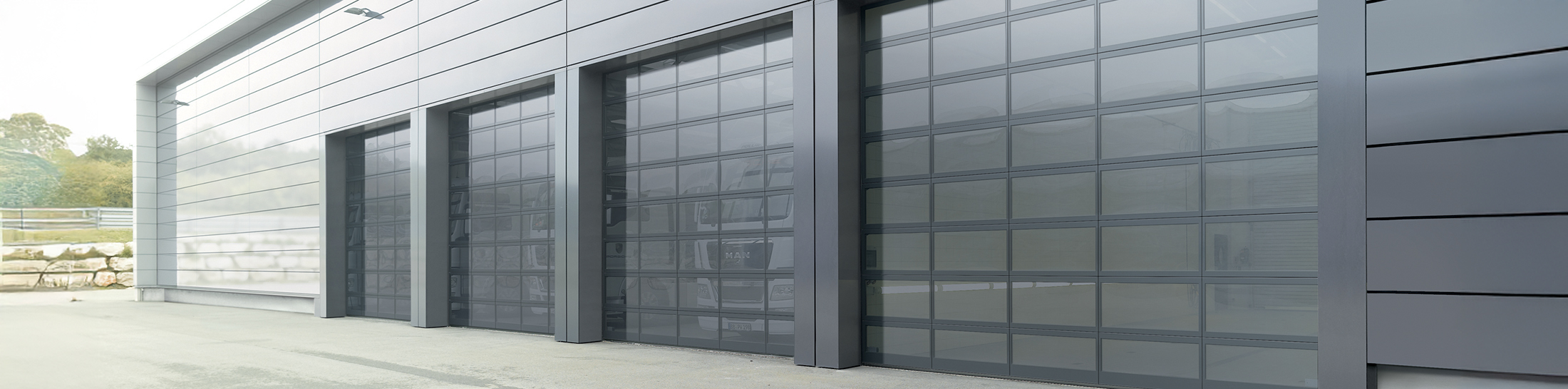
Complete Specification Guide for Commercial and Industrial Buildings
Choosing the right industrial sectional door is a significant investment for any commercial or industrial building.
This comprehensive guide covers everything you need to know before purchasing, from measuring and specification to panel options, automation, and crucially how these doors can help you meet UK Building Regulations for thermal performance.
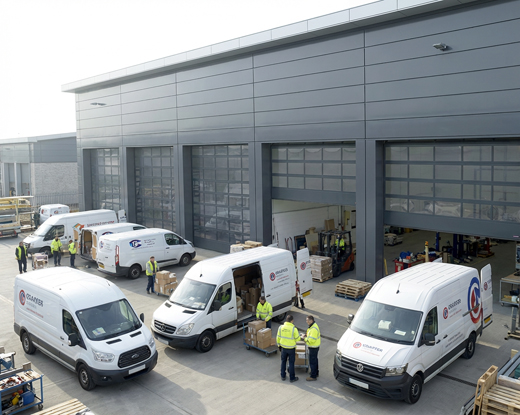
What is an Industrial Sectional Door?
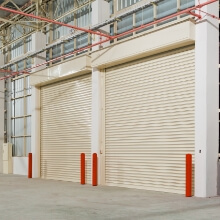
An industrial sectional door consists of multiple horizontal panels (sections) that are hinged together and travel vertically on tracks mounted to each side of the opening. When opened, the panels follow the tracks and store horizontally beneath the ceiling or vertically against the internal wall, depending on the track configuration.
Unlike roller shutter doors which coil around a drum, sectional doors maintain their flat panel structure throughout operation. This design offers superior insulation, smoother operation, and a more aesthetically versatile appearance.
INSULATION: THE MAJOR BENEFIT OF SECTIONAL DOORS
One of the most significant advantages of industrial sectional doors over other door types is their exceptional thermal insulation performance. This is not just about comfort or energy bills, it is increasingly a matter of legal compliance with UK Building Regulations.
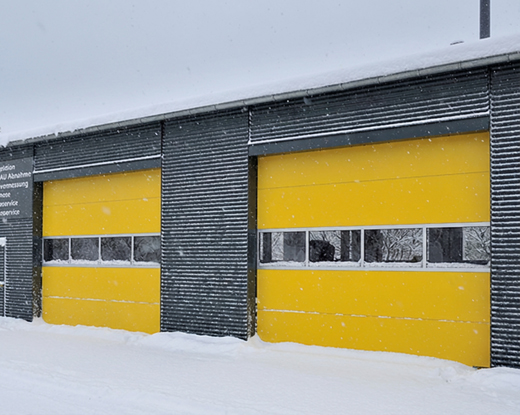
Why Insulation Matters for Industrial Buildings
Industrial and commercial buildings lose enormous amounts of heat through poorly insulated doors. Large door openings are often the weakest point in a building's thermal envelope, and with energy costs continuing to rise, the financial case for high-performance insulated doors has never been stronger.
Key benefits of superior insulation include:
- Reduced heating costs – less heat escapes, lower energy bills
- Reduced cooling costs – better thermal barrier in summer
- Improved working conditions – more stable internal temperatures year-round
- Reduced carbon footprint – lower energy consumption means lower emissions
- Compliance with Building Regulations – meeting legal requirements for new builds and major renovations
- Future-proofing – as regulations tighten, high-performance doors will remain compliant
UK Building Regulations Part L
What You Need to Know
Approved Document L (Conservation of Fuel and Power) sets out the energy efficiency requirements for buildings in England and Wales. Volume 2 specifically covers non-domestic buildings, including industrial and commercial premises.
Since the 2022 update (effective June 2022), the regulations have become significantly more stringent, with further tightening expected in future revisions toward Net Zero targets.
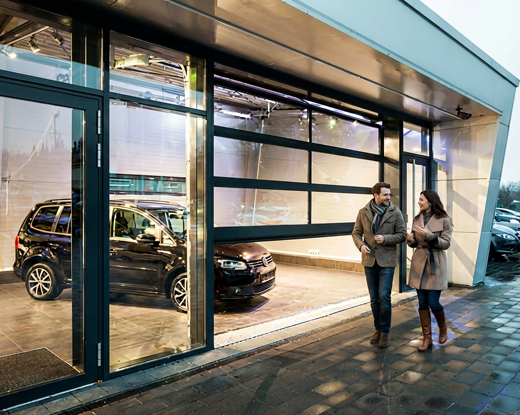
Current Part L Requirements for Non-Domestic Buildings (2022 onwards):
Note: Scotland has even stricter requirements (typically 1.4 W/m²K for doors).
Air Permeability: Part L also requires buildings to meet air permeability standards of 8.0 m³/(h·m²) at 50 Pa to minimise unwanted air leakage—making comprehensive door sealing essential.
How Industrial Sectional Doors Achieve Compliance
Industrial sectional doors are specifically designed to deliver the thermal performance required by modern Building Regulations. Their construction offers several advantages:
4. Thermal Break Technology
Premium sectional doors such as the Hormann SPU 67 Thermo and APU 67 Thermo incorporate thermal break technology—an insulating barrier between the inner and outer door skins that prevents cold bridging. These doors achieve U-values as low as 0.5 W/m²K, far exceeding current requirements and future-proofing against tighter regulations.
3. Comprehensive Sealing System
Sectional doors feature a complete perimeter sealing system:
- Bottom seal – flexible rubber seal accommodating uneven floors
- Side seals – brush or rubber seals against the frame
- Top seal – header seal preventing ingress above the door
- Inter-panel seals – between each panel section
This sealing system not only improves thermal performance but ensures compliance with air permeability requirements under Part L.
4. Minimal Thermal Bridging
Unlike roller shutters where slats interlock with metal-to-metal contact, sectional door panels are joined with insulated hinges and seals, minimising thermal bridging across the door surface.
Sectional Doors vs Other Door Types: Insulation Comparison
Key takeaway: For new-build commercial and industrial projects, or major renovations requiring Building Control approval, industrial sectional doors are often the only practical choice to meet Part L requirements without compromising on door size or functionality.
Energy Savings: The Business Case
Investing in high-performance insulated sectional doors delivers measurable returns:
Example Calculation:
A 5m x 5m door opening on a heated warehouse:
- Single-skin roller shutter (U-value 5.5 W/m²K): Heat loss ~1,375 W per °C temperature difference
- 67mm Thermo sectional door (U-value 0.9 W/m²K): Heat loss ~225 W per °C temperature difference
Saving: Over 80% reduction in heat loss through the door
Over a heating season, this can translate to hundreds or thousands of pounds in reduced energy costs—paying back the additional investment in a high-performance door within just a few years.
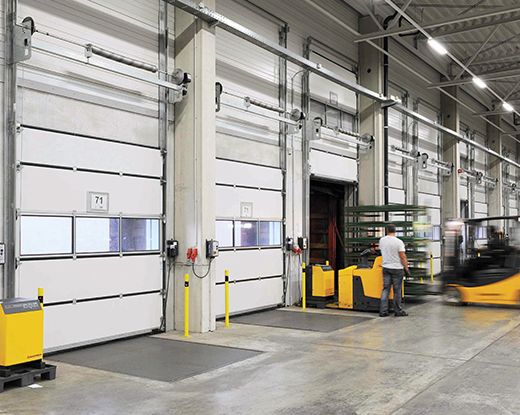
Compliance Documentation
To demonstrate Part L compliance, you will need:
- Manufacturer's U-value certification – showing tested thermal performance
- Installation certificate – confirming correct fitting and sealing
- Air permeability data – if required by Building Control
- CE/UKCA marking – confirming conformity with relevant standards
All Hormann and Teckentrup industrial sectional doors supplied by Samson Doors come with full compliance documentation.
Future Regulations: Preparing for Net Zero
The UK Government has committed to Net Zero emissions by 2050, and Building Regulations will continue to tighten. The Future Buildings Standard (expected to take effect from 2025 onwards for non-domestic buildings) is likely to introduce even stricter thermal requirements.
By specifying high-performance sectional doors now—particularly 67mm or 80mm Thermo models—you are future-proofing your building against upcoming regulatory changes and demonstrating commitment to sustainability.
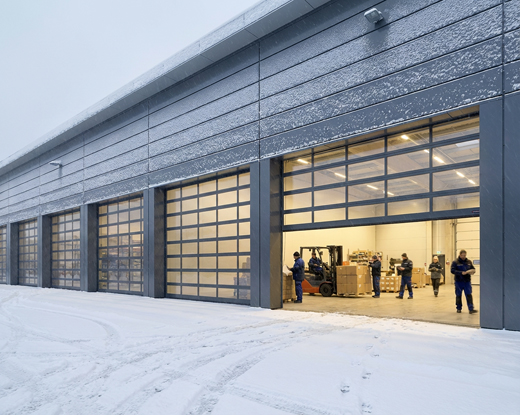
Key Considerations Before Buying
1. Opening Size
Industrial sectional doors are available in sizes up to 10,000mm wide and 8,000mm high, making them suitable for the largest warehouse and logistics openings. Accurate measurement of the structural opening is essential—allow for frame fixings and any building tolerances.
2. Headroom Requirements
The amount of ceiling space above your door opening determines which track configuration you need:
3. Side Room
Typically 100–150mm of clear wall space is needed on each side of the opening for track mounting. Some manufacturers offer compact track options for restricted side room situations.
4. Panel Thickness and Insulation
As detailed above, panel thickness directly affects thermal performance:
For Part L compliance on new builds, we recommend 67mm Thermo panels as the standard specification.
Panel Design Options
Solid Steel Panels
The most common choice for industrial applications. Double-skinned steel panels with polyurethane foam core offer excellent strength, security, and insulation. Available in a wide range of colours and finishes. Horizontal external pin stripe lines are the most common panel design for sectional doors fitted in the UK.

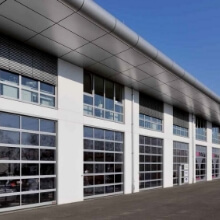
Aluminium Glazed Panels
Full or partial glazing options allow natural light into the building, reducing energy costs for lighting and improving the working environment. Glazed panels can be specified with:
- Single, double, or triple glazing
- Clear, frosted, or tinted glass
- Thermal break frames for improved insulation
Note: Glazed panels have higher U-values than solid panels. For Part L compliance, specify thermally-broken aluminium frames and double or triple glazing.
Vision Panels
Smaller window sections can be incorporated into steel panels for visibility without significantly compromising insulation or security.
Woodgrain and Custom Finishes
Laminated finishes replicate timber, Corten steel, or other materials. Bespoke printed panels can incorporate company branding, logos, or imagery.

Aluminium Glazed Panels
Full or partial glazing options allow natural light into the building, reducing energy costs for lighting and improving the working environment. Glazed panels can be specified with:
- Single, double, or triple glazing
- Clear, frosted, or tinted glass
- Thermal break frames for improved insulation
Note: Glazed panels have higher U-values than solid panels. For Part L compliance, specify thermally-broken aluminium frames and double or triple glazing.
Vision Panels
Smaller window sections can be incorporated into steel panels for visibility without significantly compromising insulation or security.
Woodgrain and Custom Finishes
Laminated finishes replicate timber, Corten steel, or other materials. Bespoke printed panels can incorporate company branding, logos, or imagery.
Track Configurations Explained
Standard Lift (N)
Panels travel vertically then curve to run horizontally under the ceiling. The most common and economical option for buildings with adequate headroom.
High Lift (H)
Panels travel further vertically before turning horizontal, ideal for buildings with high internal ceilings where you want to maximise the clear opening height.
Vertical Lift (V)
Panels travel straight up and store vertically against the internal wall above the opening. Requires headroom equal to the door height but leaves the ceiling completely clear—perfect for overhead cranes or tall vehicle access.
Low Headroom
Specialist track systems for installations with minimal ceiling clearance, using rear-mounted springs and compact hardware.
Manual vs Electric Operation
Manual Operation
Suitable for doors up to approximately 12–15m² (depending on panel weight) and low-frequency use. Spring-balanced for easy lifting with minimal effort. Lower initial cost and no power supply required.
Electric Operation
Recommended for larger doors, high-frequency use, or where ease of access is important. Key benefits include:
- Push-button or remote control operation
- Integration with access control systems
- Programmable timers and automation
- Safety sensors and auto-reverse
- Emergency manual override (standard)
High-Speed Options
For busy logistics environments, high-speed operators can achieve opening speeds of 0.3–0.5 m/s, reducing wait times and minimising heat loss during frequent cycles.
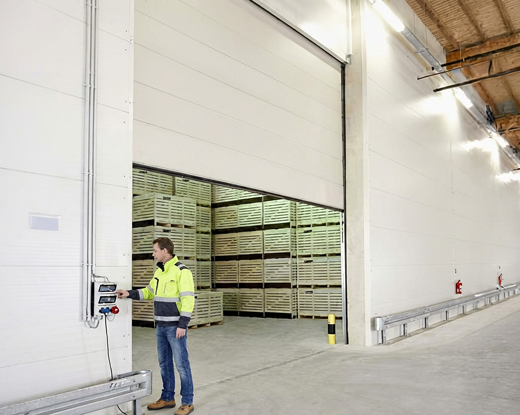
Safety Features
All quality industrial sectional doors include essential safety features:
- Anti-drop device – prevents the door falling if a spring fails
- Finger-trap protection – panel joints designed to prevent finger injuries
- Safety edge – bottom edge sensor reverses door if obstruction detected
- Light curtain – optional infrared barrier across the opening
- Emergency release – manual override for power failures
Security Considerations
Industrial sectional doors offer inherent security advantages:
- Robust double-skinned panel construction
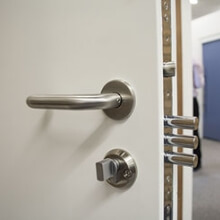
- Multi-point locking mechanisms
- Reinforced tracks and hinges
- Optional Secured by Design certification
- Integration with alarm systems
For high-security applications, specify reinforced panels and upgraded locking systems.
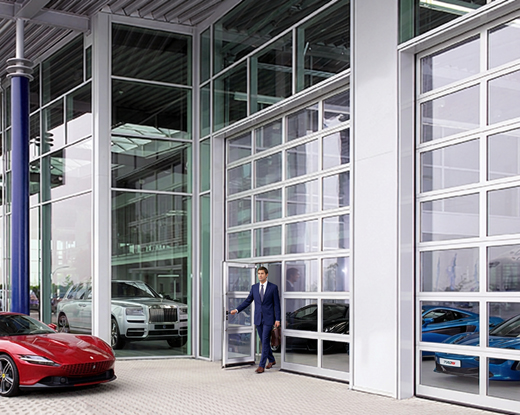
Weathersealing and Environmental Protection
Quality sectional doors feature comprehensive sealing:
- Bottom seal – flexible rubber seal to uneven floor surfaces
- Side seals – brush or rubber seals against the frame
- Top seal – header seal to prevent ingress above the door
- Inter-panel seals – between each panel section
This sealing system prevents dust, rain, wind, and pests from entering the building - and is essential for Part L air permeability compliance.
Colour and Finish Options
Most manufacturers offer:
- Standard RAL colours (typically 5–10 options at no extra cost)
- Full RAL palette (200+ colours) at additional cost
- Woodgrain laminates (Golden Oak, Rosewood, Anthracite, etc.)
- Stucco, smooth, or micrograin surface textures
- Custom printed finishes for branding
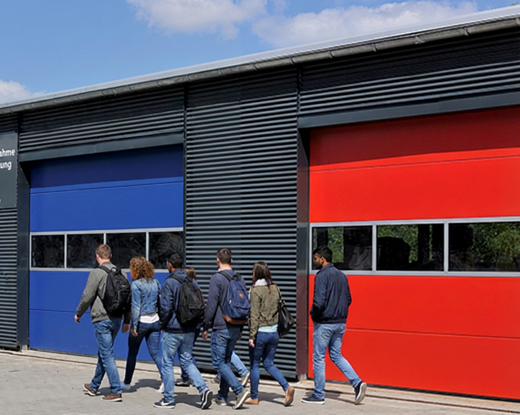
Maintenance Requirements
Industrial sectional doors require minimal maintenance:
- Annual service – professional inspection of springs, cables, tracks, and operator
- Monthly checks – visual inspection of seals, panels, and safety devices
- Lubrication – hinges and rollers as required
- Cleaning – panels and tracks to remove debris
With proper maintenance, a quality industrial sectional door will provide 20+ years of reliable service.
Choosing a Manufacturer
Samson Doors supply industrial sectional doors from leading European manufacturers including:
Hormann
Germany's largest door manufacturer, offering the SPU, APU, and ALR ranges with panel thicknesses from 42mm to 67mm and sizes up to 10m x 7.5m. The SPU 67 Thermo achieves U-values as low as 0.51 W/m²K.
Teckentrup
German manufacturer specialising in high-performance industrial doors, with the SW and SL ranges offering excellent insulation and glazing options.
Both manufacturers provide comprehensive warranties, full compliance documentation, and UK-based support. We also offer manufacturers with more specific bespoke feature and design elements when required.
FAQs – Industrial Sectional Doors
Q: Will an industrial sectional door meet Building Regulations Part L?
A: Yes. Industrial sectional doors with 42mm panels or thicker comfortably meet current Part L requirements (maximum U-value 1.6 W/m²K for non-domestic buildings). For new builds, we recommend 67mm Thermo panels (U-value ~0.9–1.0 W/m²K) to exceed requirements and future-proof against tighter regulations expected under the Future Buildings Standard.
Q: How does the insulation in a sectional door compare to a roller shutter?
A: Sectional doors offer significantly superior insulation. A standard 42mm sectional door achieves a U-value of around 1.4–1.8 W/m²K, while a 67mm Thermo panel achieves 0.5–1.0 W/m²K. By comparison, even the best insulated roller shutters typically achieve only 3.9–4.0 W/m²K. This means sectional doors can reduce heat loss through the door opening by up to 75–80% compared to roller shutters—delivering substantial energy savings and improved working conditions.
Q: Are sectional doors more secure than roller shutters?
A: Yes. Industrial sectional doors offer excellent security due to their rigid, double-skinned panel construction, multi-point locking mechanisms, and reinforced track systems. Unlike roller shutters where the curtain can potentially be forced or lifted, sectional door panels interlock firmly and are extremely difficult to breach. For high-security applications, Secured by Design and LPS1175 certified sectional doors are available, providing tested and proven resistance to forced entry.
Q: How long do industrial sectional doors last compared to other door types?
A: Industrial sectional doors are built for longevity and typically outlast most other industrial door types. With proper maintenance, a quality sectional door will deliver 25–30+ years of reliable service—significantly longer than roller shutters (15–20 years) or high-speed fabric doors (10–15 years). This extended lifespan is due to their robust panel construction, minimal moving part contact during operation, high-quality spring and track systems, and resistance to wear and damage. The panels do not rub against each other during opening and closing, preserving both the finish and structural integrity over decades of use.
Q: What maintenance do sectional doors require to maintain their insulation and security performance?
A: Industrial sectional doors require minimal maintenance to maintain peak performance. We recommend an annual professional service to inspect springs, cables, tracks, seals, and the electric operator. Monthly visual checks of the door seals, panels, and safety devices will help identify any issues early. The comprehensive sealing system (bottom, side, top, and inter-panel seals) should be inspected regularly and replaced if worn to maintain both thermal performance and weather protection. With this simple maintenance regime, sectional doors will retain their insulation values and security integrity for their full service life.
Q: Can I retrofit an electric operator later?
A: Yes, most manual doors can be upgraded to electric operation at a later date.